5 JOKERZ
Five teenagers from five corners of the Earth, each a basketball prodigy, each carrying one of five ancient Egyptian stones, must re-assemble on the buried court where the game was born and beat the risen Pharaoh's ghost team in a single basketball match. They have the talent. They have the stones. They only have a chance if they learn to play as one.
The themes
The mythology
Five thousand years ago, on a sun-baked hill in the Egyptian desert, basketball was already being played. The court was hand-cut into the rock. The ball was stitched leather; the rim was lashed to a sandstone pillar. The five stat categories were sacred (Points, Rebounds, Assists, Blocks, Steals), and a community team of five commoners (a baker, a fisherman, a stonemason's daughter, a runner, a sandal-maker's son) beat the Pharaoh's hand-picked five every time the desert lined up to watch.
The Pharaoh's men were taller, fed on royal grain, trained from boys in private courts. But they played for themselves. The community played as one body. So the community always won.
Pharaoh Ahnem-Khet, humiliated past tolerance, called on the dark priesthood that whispered in the catacombs beneath his palace. They gave him five crystals, one for each stat. With all five placed on the court, whichever team the Pharaoh designated received the Joker, the highest possible level of that stat, a power beyond mortal skill. Removed from the court, the crystals drained the team standing on it. The Pharaoh's people became gods. The community became dust.
The fixed match began. The Pharaoh sat on his litter and laughed. And then the sky fell. An asteroid struck the upper desert. The court was buried under ten feet of sand in a single afternoon. The five crystals were blasted out of the Pharaoh's hand and into low orbit. The community team fled. The Pharaoh did not.
A community priest named Setep-Ka, who had stood with the commoners his whole life, chose, alone in the storm, to use the dark priesthood's own magic against the Pharaoh. He entombed Ahnem-Khet alive beneath the buried court. The cost was that every day Ahnem-Khet stayed entombed, his rage fed his power. Setep-Ka knew this. He also knew he had no choice.
The crystals re-entered the atmosphere on five different nights. Four landed on four continents. One, the yellow, found its way back to the desert, where the dunes had reburied the court entirely.
The five stones
Each stone hums at a frequency only its bearer can hear. Placed together at their five marked positions on the original desert court, they grant the team that plays as one the power of the Joker.
The five bearers
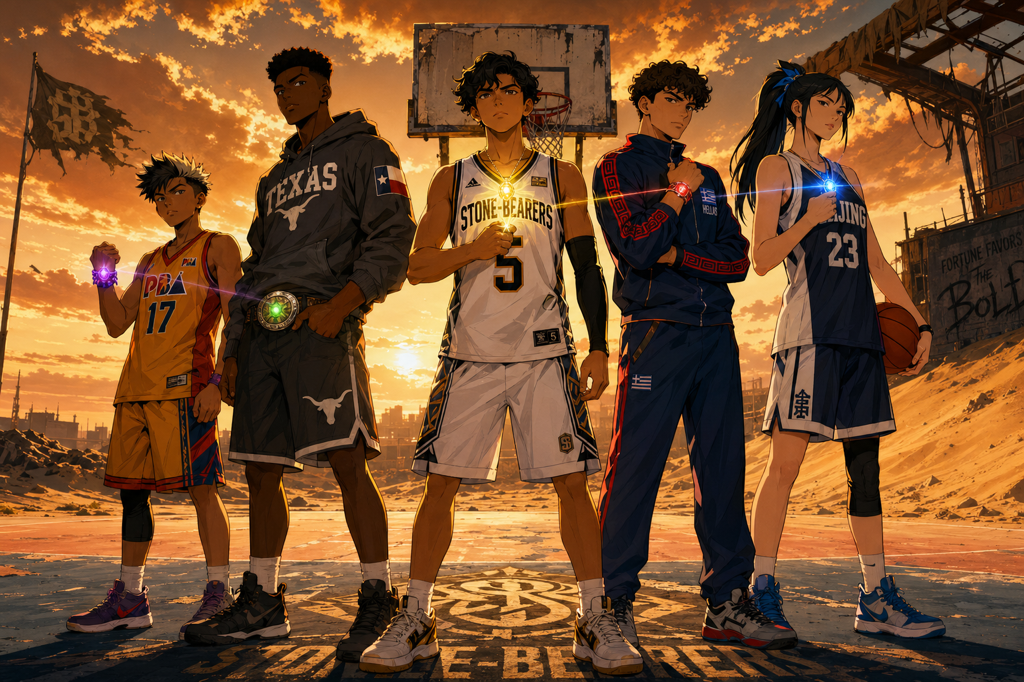
Each is fifteen, each plays for their country's youth team, each is about to converge at a single international tournament in Athens.
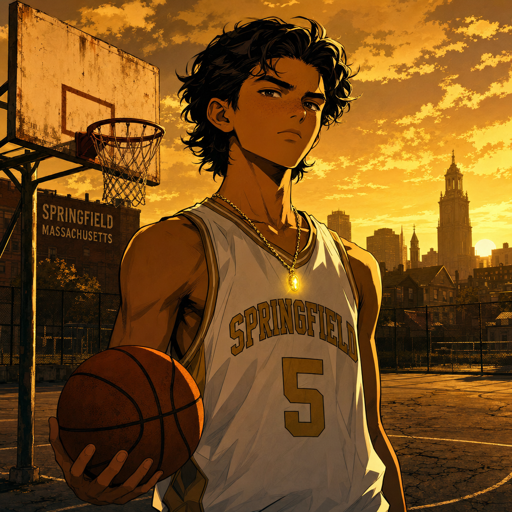
Marco Reyes
Star kid. Has dreamed of the Pharaoh's eyes every birthday since he was five. Wears the yellow stone on a chain, passed down from his great-great-grandfather Manuel Reyes, the Mexican-born archaeologist who pulled it from the Egyptian sand in the 1890s. Carries the team's weight without quite knowing why.
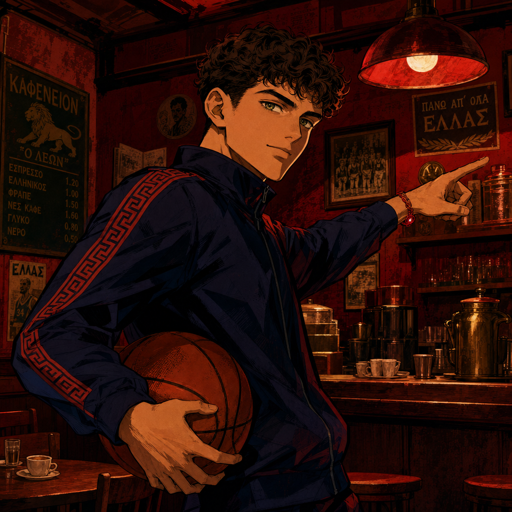
Niko Stathakis
Bossy, strategic, lives above his grandmother's kafenió where the red stone has been a lucky charm on the wall for 110 years. Reads the floor faster than anyone else his age. Has to learn that the best play isn't always the one he called.
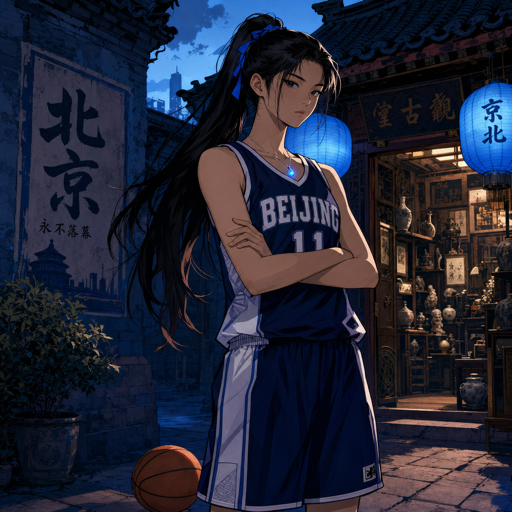
Mei Ling Liu
Reluctant prodigy. Doesn't actually love the game. Her grandmother, a curio dealer in a converted hutong, has been quietly guarding the blue stone for decades. The boards bend toward Mei Ling whether she wants them to or not.
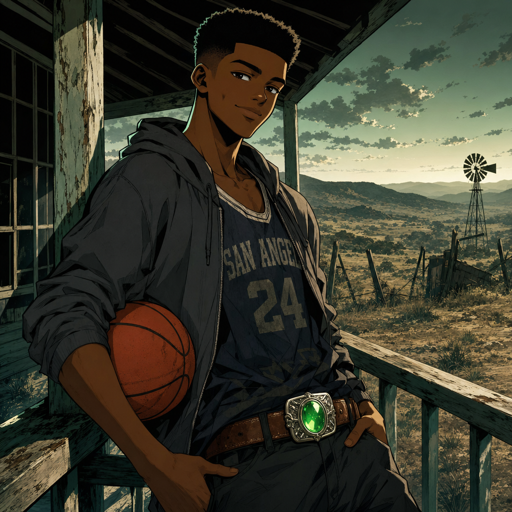
Cole Tanner
Cowboy skeptic. The green stone became his grandfather's belt-buckle in 1956 after a meteorite shower over the West Texas hill country. Doesn't believe in any of it. Walls the paint like he's been there before, because he has, in another life.

Joey Santos
Smallest kid on every floor he's ever stepped on. Wears the purple stone braided into a friendship bracelet his lola made for him. Believes every word of the legend immediately. He's the one who pulls the team into the same hotel room.
The Pharaoh's ghost team
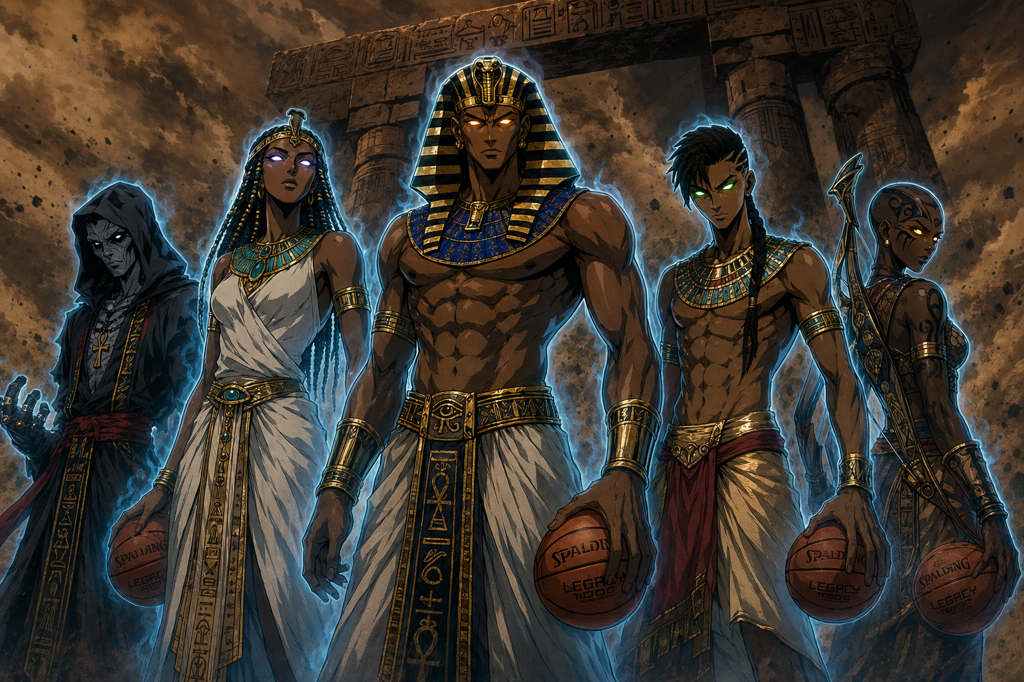
Five ghost players rise with him. The Joker rank itself is unattainable to any single mortal. Only the union of all five stones on a single court grants it. The Pharaoh's team can only ever reach Ace tier.
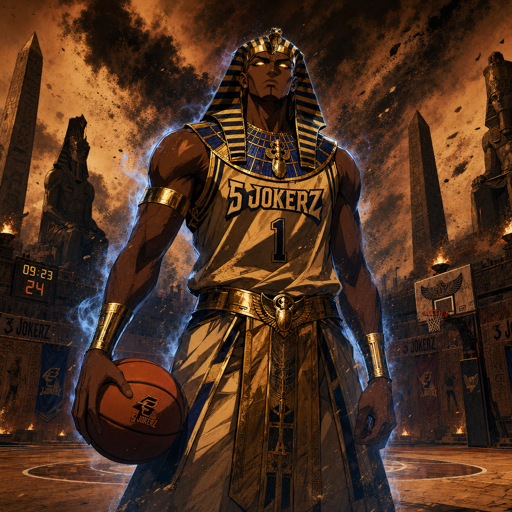
Pharaoh Ahnem-Khet
Unmovable. Fouls without consequence. Calls every play.
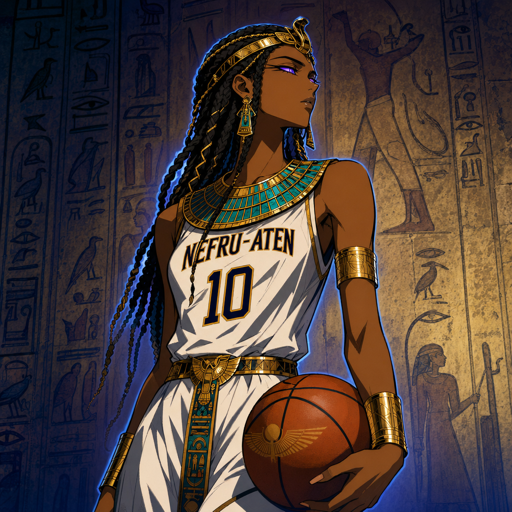
Queen Nefru-Aten
Cold accuracy from anywhere on the floor. Never speaks.
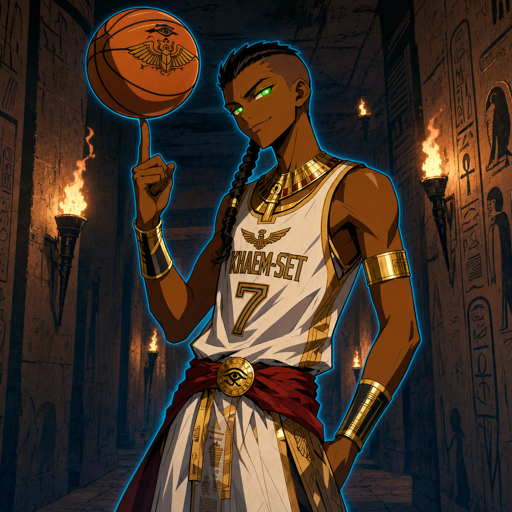
Prince Khaem-Set
The Pharaoh's son. Petulant, electric, brilliant. Has something to prove every possession.
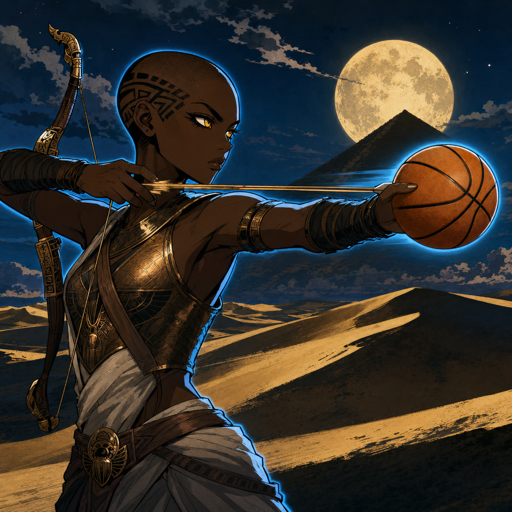
Royal Archer Sahara
Pure marksman. Every shot looks like an arrow loosed.
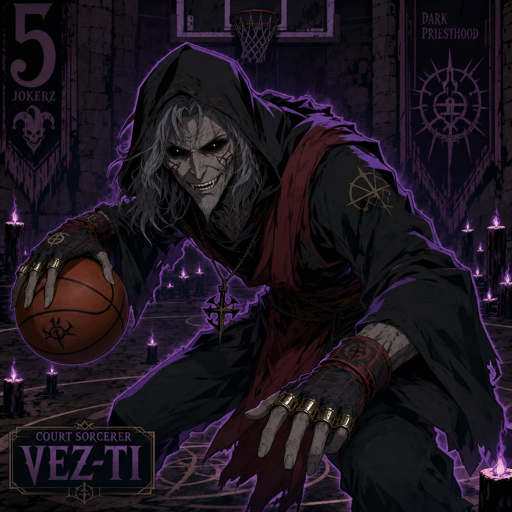
Court Sorcerer Vez-Ti
Plays dirty. Whispers curses while defending. The dark priesthood's last living member, granted false Joker rank by the Pharaoh as a courtesy.
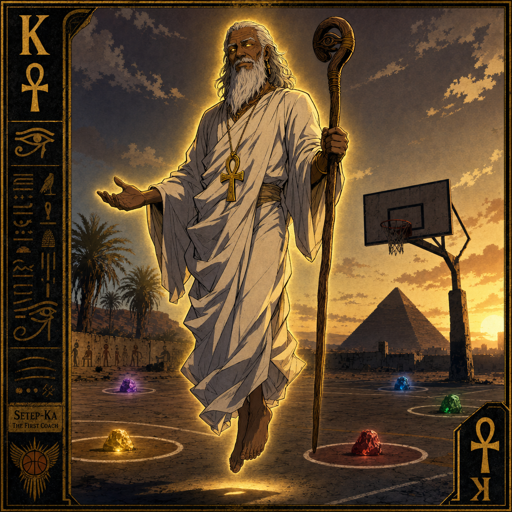
Setep-Ka, the priest who waited
Setep-Ka can only reach the bearers in dreams, and only when more than one stone is awake at the same time. As the kids converge, his voice grows clearer. Once they all five stand in the same building, he can appear to them in waking visions.
He is their tactician. He is the only one who knows the rules of the spell. He can never leave the desert: his soul is the keystone of the entombment that trapped the Pharaoh, and the moment the Pharaoh is defeated, Setep-Ka will dissolve at peace.
Season 1 · 13 episodes
From discovery to convergence to the final whistle. Tap an episode for the full beat.
How the story feeds the game
The five-card hand mechanic is, literally, the show's thesis. A perfect Joker hand means: every category played at its highest level as a unified team. That's the lesson of the finale, and the reason a perfect hand is so rare.
Pick a hand
Predict each suit before tip-off. Five cards, five stat categories, the same five your team must master in the show.
Play →Climb the board
Earn tokens on every correct rank. Stack them up and you're not far behind the legends in the canon.
Leaderboard →Tonight's five
The Daily Starting 5. Draft the five players you think will deal the biggest cards. Every card scores. The Pan-Hellenic, every single day.
Draft →